White faced heron
October 5, 2020
This beautiful creature was sneaking around in my garden. What a neck! Wish I’d thought to video it walking around…
I did get a few shots before he flew off.


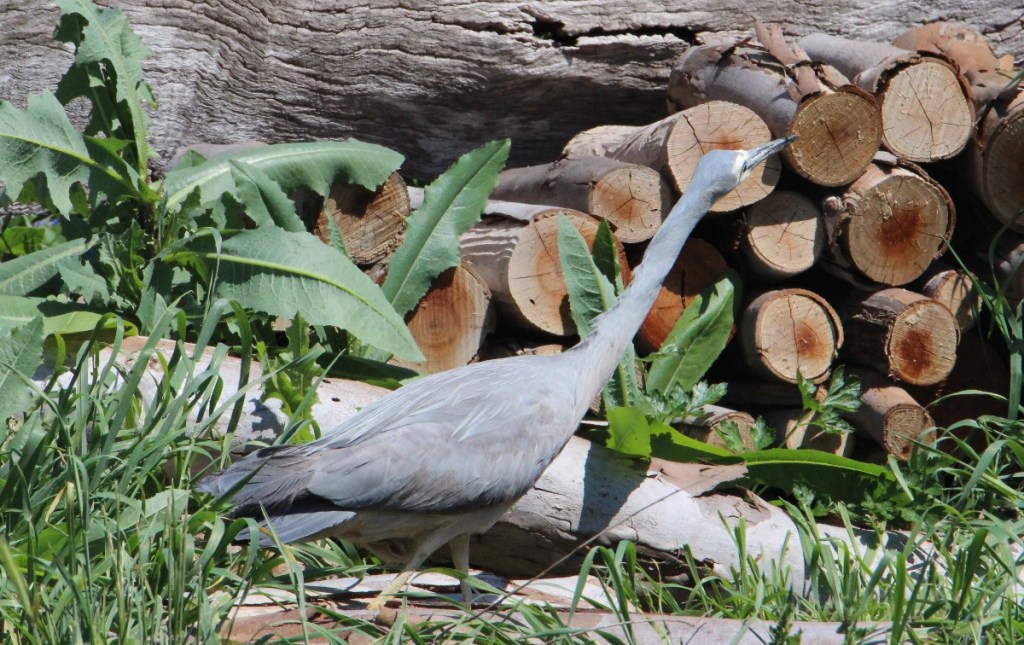

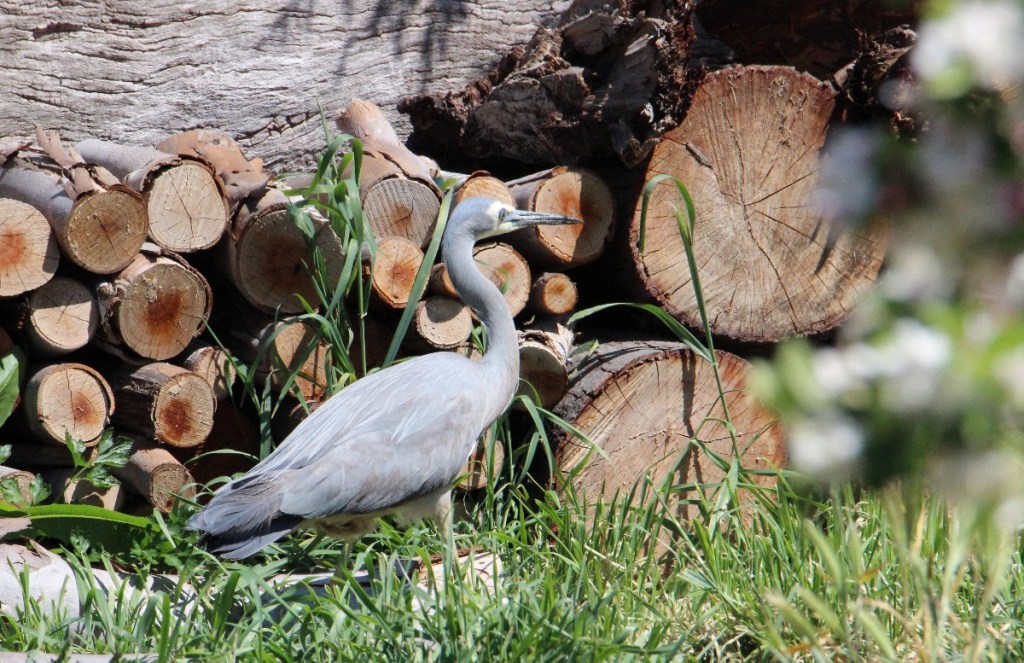
This beautiful creature was sneaking around in my garden. What a neck! Wish I’d thought to video it walking around…
I did get a few shots before he flew off.
Did you know some birds use their wings to make sound?

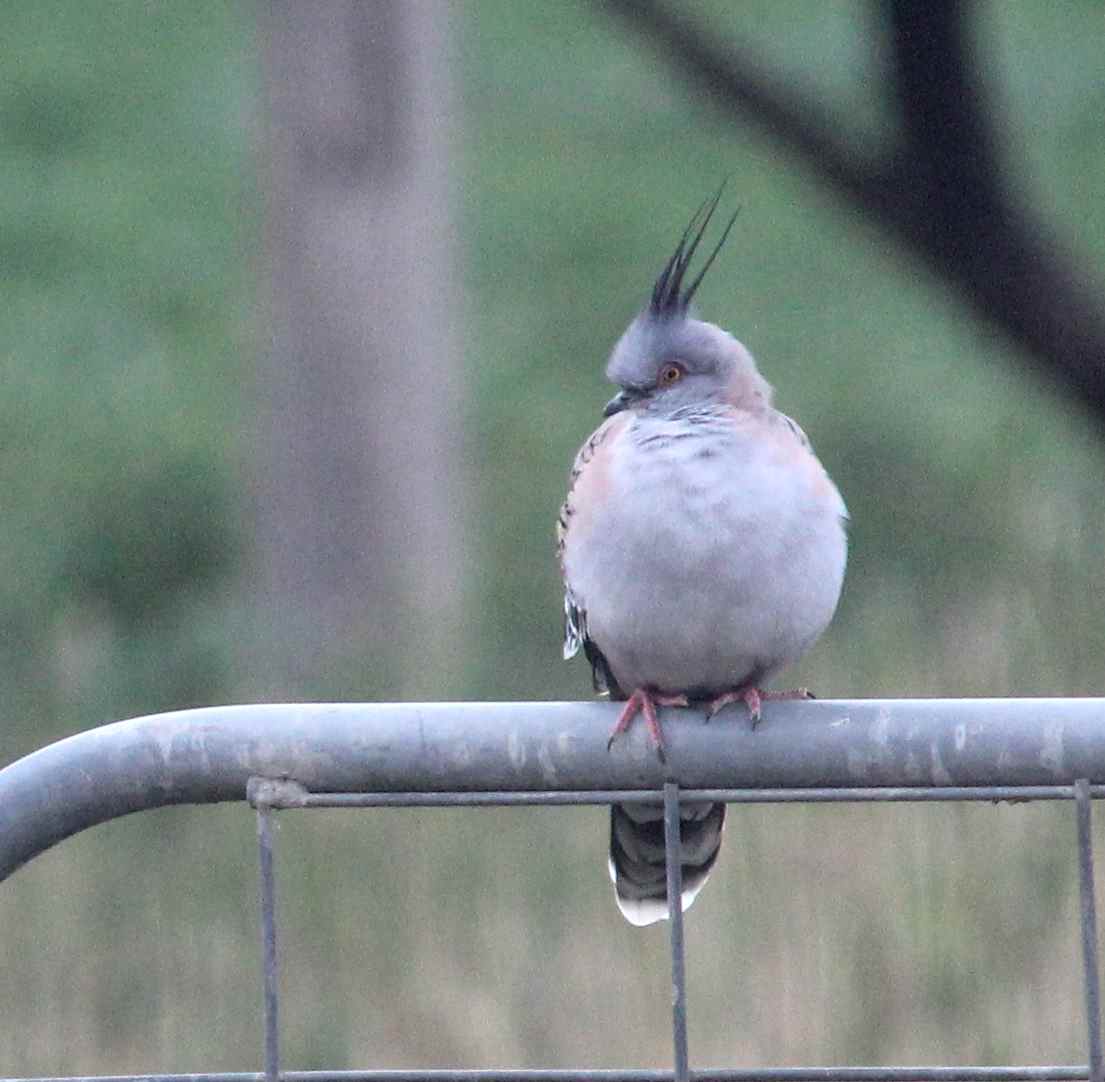
This is a crested pigeon (Ocyphaps lophotes). It uses its feathers to communicate with other birds. They make noises when they fly, sometimes being called whistle-winged pigeons. The wings can make different notes, high notes signal danger. For more information click here.

Here’s another visitor. I need help identifying it.

It is a Noisy Miner. Eliza Waters, on the other side of the globe in Massachusetts, US, identified it from another Australian blogger’s site.

This Sulphur Crested Cockatoo, also known as the Yellow Crested Cockatoo, was happily sitting among the blossoms in my tree. Don’t be deceived, cockatoos can be very destructive. They chew on the branches and in my large gum tree, they have denuded the ends of the branches and littered the ground with small pieces. They have even been known to vandalize houses. They gather together in large mobs and chew on timber, deckings and railings.
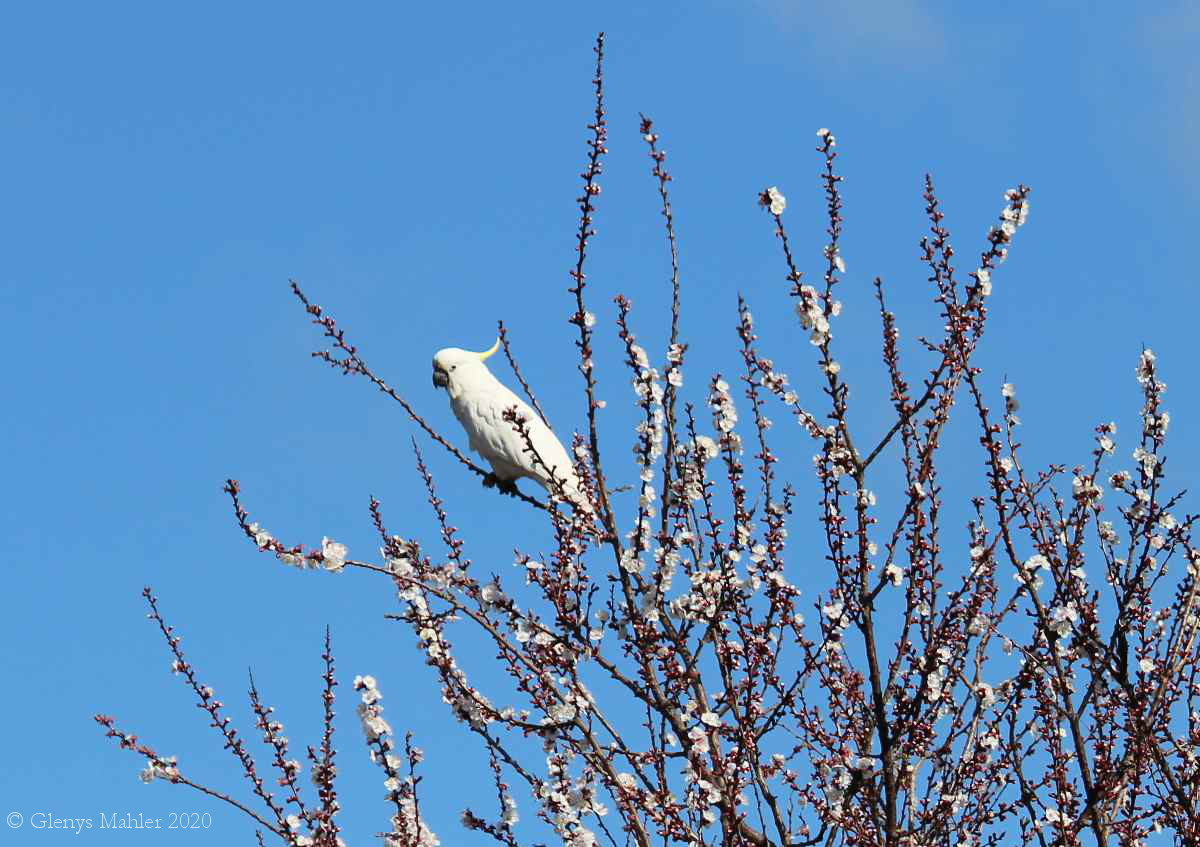
Luckily this one and his friend flew off when he noticed I was taking his photo. Camera shy!

I’ve been reading about what makes a good black and white photograph. I’m finding it difficult to get my head around. But I’m happy with this.
I like it geometric feel. The bird was kind enough to pose at exactly the right angle. I like the different shades on the pipes and I love the flair of white on the beak and tail of the bird.
I could have rotated the photo to make the cross pipe exactly horizontal, but I like the slight angle leading the eye up to the bird.
In colour the same shot.
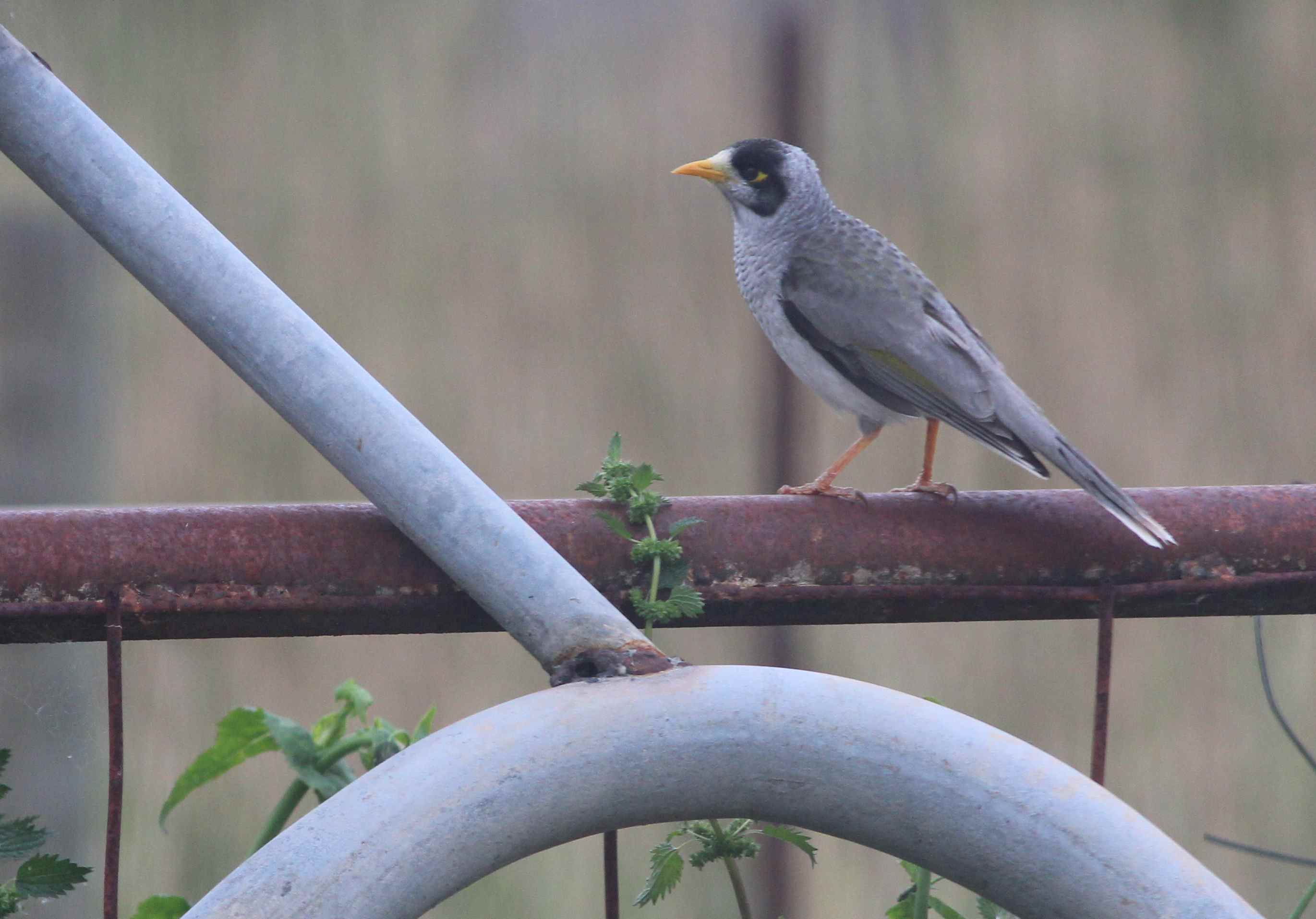
This guy couldn’t resist posing for me. He’s a very different character. I just love him.
I like him in black and white too.


I spotted this duck perched high up in a tree branch. She was spying on a beautifully coloured male duck. He was showing off, trying to impress her. Sadly, she flew off and left him all alone.
I thought these were mallard. But since I posted this I learnt that mallards are more likely to have orange feet. I think they are Australian Shelducks.
Ready
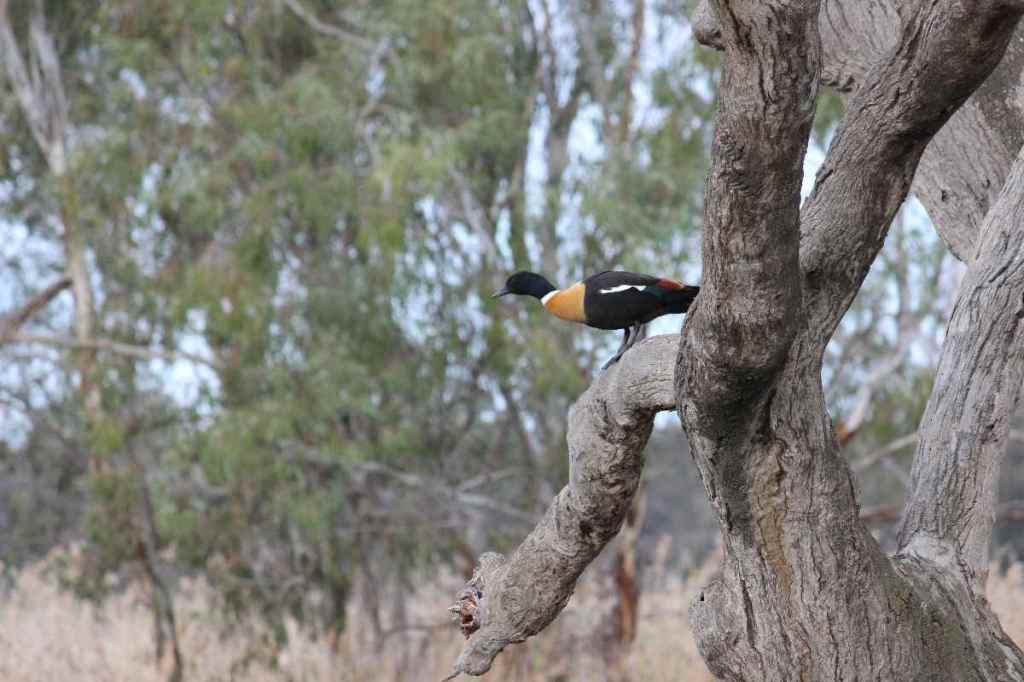
Set

Go
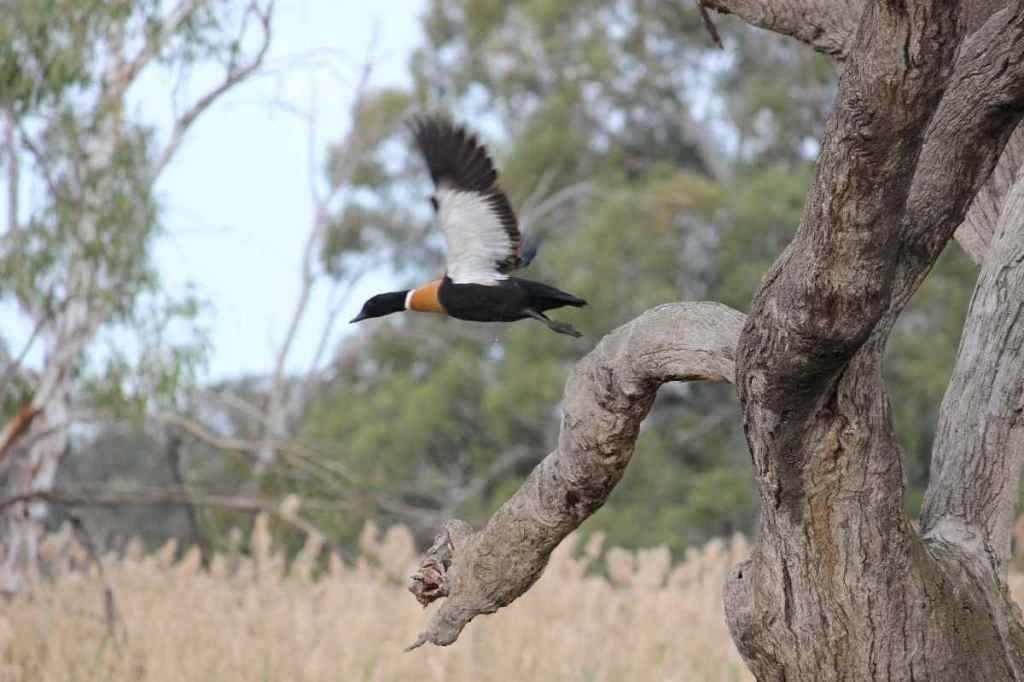
Landed and having a quiet swim.

All by himself.

Taken today. This bird, I think it is a Whistling Kite, (also called a Whistling Eagle or Whistling Hawk) was feasting on a bunny in one of our farm paddocks. It kept flying away as we tried to capture a photo. I’m jealous my husband took the best shot, though he says he had the most patience.

30 posts into this blog, I’ve decided that I really enjoy it. I am enjoying sharing the environment where I live. It’s good to take the time to look around and appreciate where I live.
An unexpected bonus is that I also enjoy other people’s blogs. I love reading and comparing experiences. The other day, I was frustrated after looking at the rabbit damage on my farm. I stumbled on another farm blog where someone on the other side of the world was describing their problems with the rats and other animals I’ve had no experience with. I’m glad I only have rabbits and the odd wallaby!
I am blown way by some of the amazing photography. There are so many bloggers who produce stunning pictures. These pictures of birds illustrate my frustration. The birds are so small, when they could be the focus of the picture. My photos have generally been taken on my phone, which does do a reasonable job at times, but I can’t help thinking that it is time to dust off my ‘real’ camera and learn how to use it properly.
This lagoon is 15 metres from my front door, separated by a gravel road. It is home to a variety of bird and wildlife. These birds know no boundary between the lagoon and my garden. These are called Crested Pigeons.

The pattern in the gum tree is called a burl. It’s a deformed tree growth. The wood is prized by some wood workers.

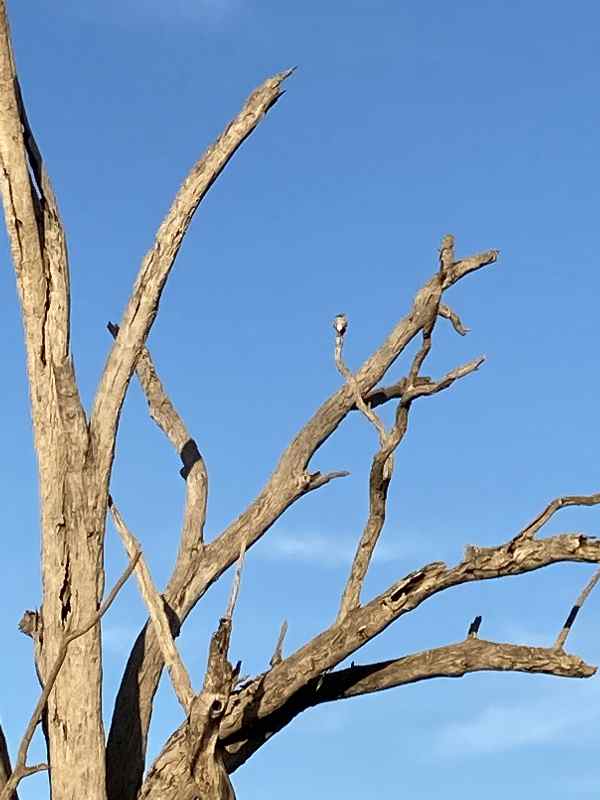

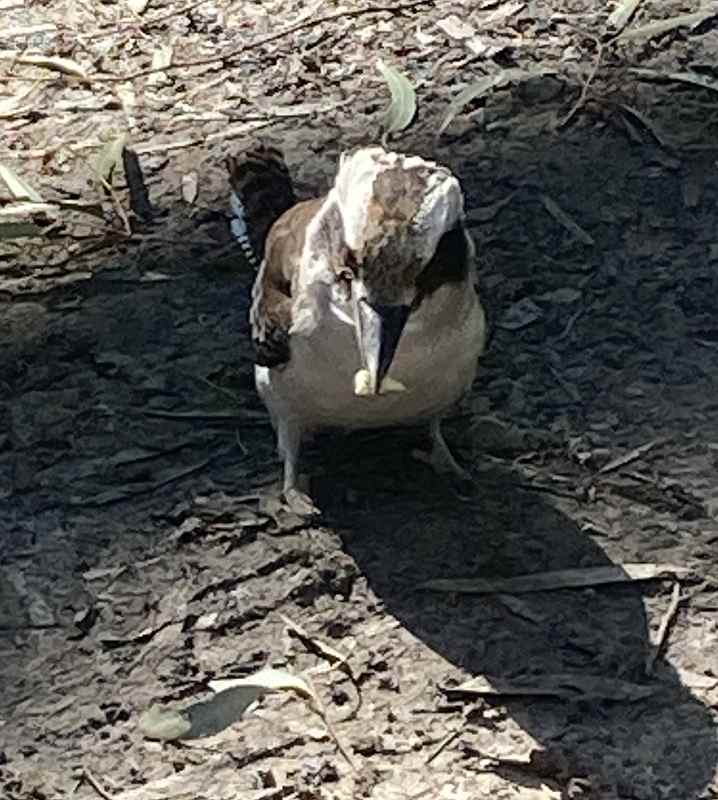
The most amazing thing about this bird is the noise it makes. It laughs. Living where I do, it’s something that I take for granted. I had lunch with this friendly little fellow the other day. WE stopped to have our burger and chips by the river. I went off looking at the ducks and when I got back to the car, Bruce had been feeding him tiny bits of chips. I was surprised how tame he was. We did have one bird who would ride around on our hills hoist in the back yard, but he was easily startled and would fly away when disturbed. This is the closest I’ve been to one in the wild.
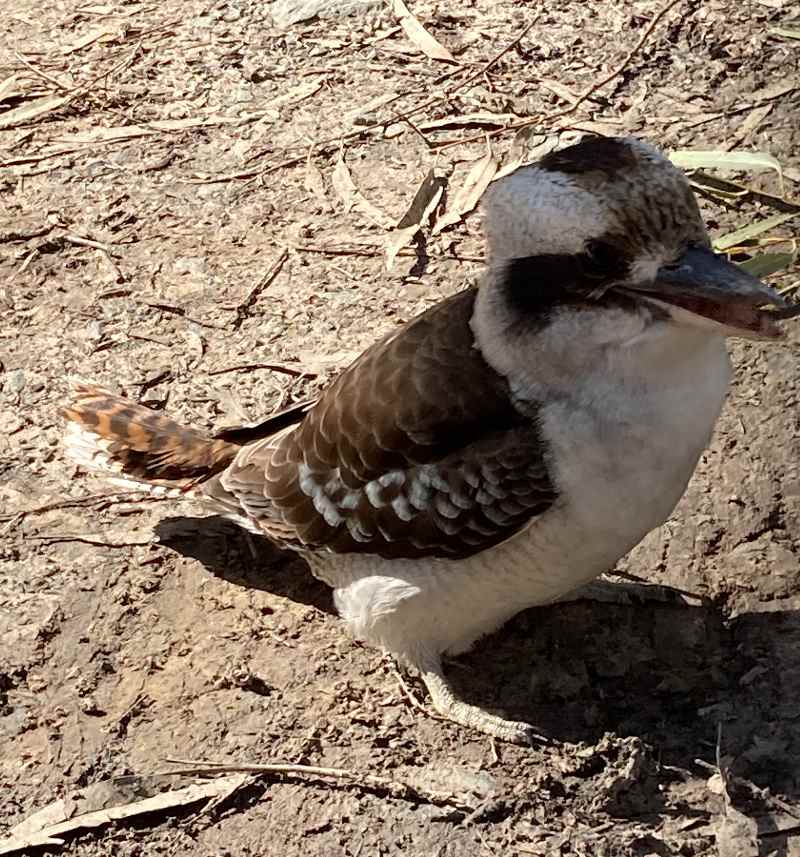
According to Wikipedia
Kookaburras are terrestrial tree kingfishers of the genus Dacelo native to Australia and New Guinea, which grow to between 28 and 42 centimetres (11 and 17 inches) in length and weigh around 300 grams (10 1⁄2 ounces). The name is a loanword from Wiradjuri guuguubarra,

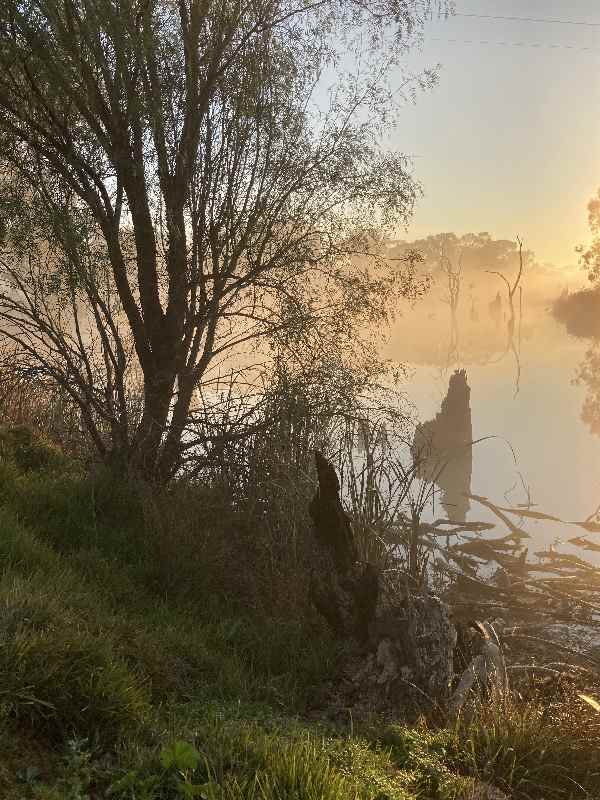
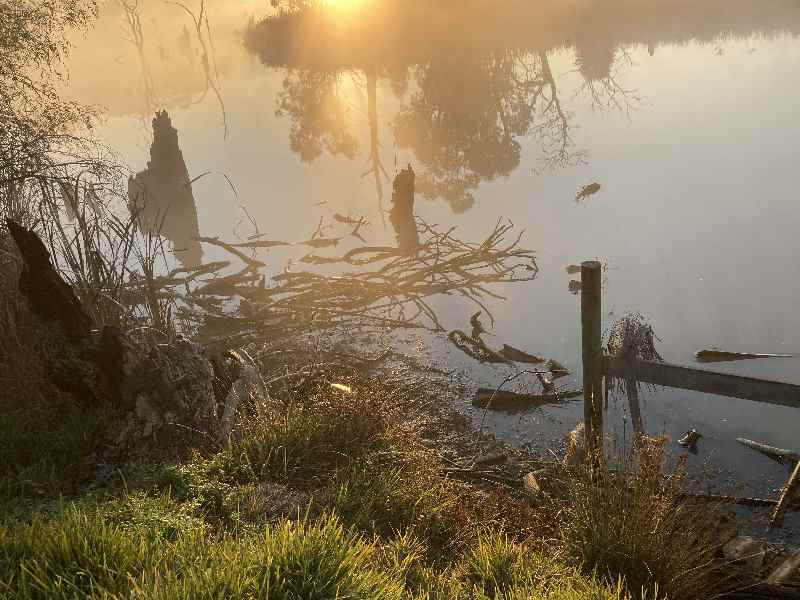
It defies logic really. In winter we have very little water in the lagoon, when we get our rain and in summer it is full, when rainfall is very scarce. I live on a lagoon that is used for irrigation in summer and in winter the water level drops, revealing the banks. It is part of an amazing wetland area on the Murray River and many birds fly in for a stop over. Some migrate from huge distances to nest here and others just seem to appear and disappear. In winter the lagoon takes on a much different appearance. Although there is lots of mud, I think it has a special kind of beauty.
A platypus hides in this bank (below). It is a very shy creature. You mostly just see it disappearing into the distance.

Be Original!
Drop in and stay awhile
Gallery and Giftshop
En fotoblogg
To See a World in a Grain of Sand...
Fotografie, Radeln und Reisen
Just another WordPress.com site
"You must have birds in your heart before you can find them in the bushes." -- John Burroughs (Journal of the Outdoor Life, v20, 1923, p. 137)
Gardening Fairies Flowers Spirituality Angels Love Joy
 AT PATHO