Circles in nature and life

Did you know dandelions are symbols of emotional healing?

Here we go again. My mind is reeling as I try to gather my thoughts and prepare emotionally for the next six weeks.

My household went in to lockdown way back in March. Victorians seemed to do the right things and numbers of Covid cases decreased. But a vicious second wave sees us back in an even stricter lockdown again, as of today. It’s become part of life. I note with interest as I write, that the spell checker doesn’t recognise lockdown as a single word. I thought the time was passing quickly, so quick the spell checker hasn’t caught up.

I really shouldn’t complain. I am much better placed than many to withstand the situation. I’m far away from the city and relatively secluded. I feel for the grandkids who live with us. Homeschooling, not seeing friends and being isolated on the farm is another huge adjustment. And there’s a level of anxiety, from the situation. Still they’re resilient, even looking forward to some aspects of learning at home again. Right now it’s me who is trying to prepare for the onslaught.

This dandelion, Taraxacum officinale, caught my eye today. It must be tough to survive among the bricks. It can endure whatever is thrown at it. Some call it a weed. Others, throughout history have valued it as a herb with many special properties. You can eat it or make tea with it. It’s got lots of positive nutrients. Many, many health claims are made about a myraid of medical conditions it can help with. It is even claimed to make you look better, through skin improvement.

I love its beauty. A beautiful, circular, little ball of fluff, and it reminds me of good times with my children and grandchildren puffing the fluff away and making wishes for the future. They are actually spreading the goodness. The dandelion seed has downy fluff which serves as tiny parachutes to carry it on the breeze. Some claim it can travel a hundred miles on the wind, even over the oceans.

It can survive very tough conditions.

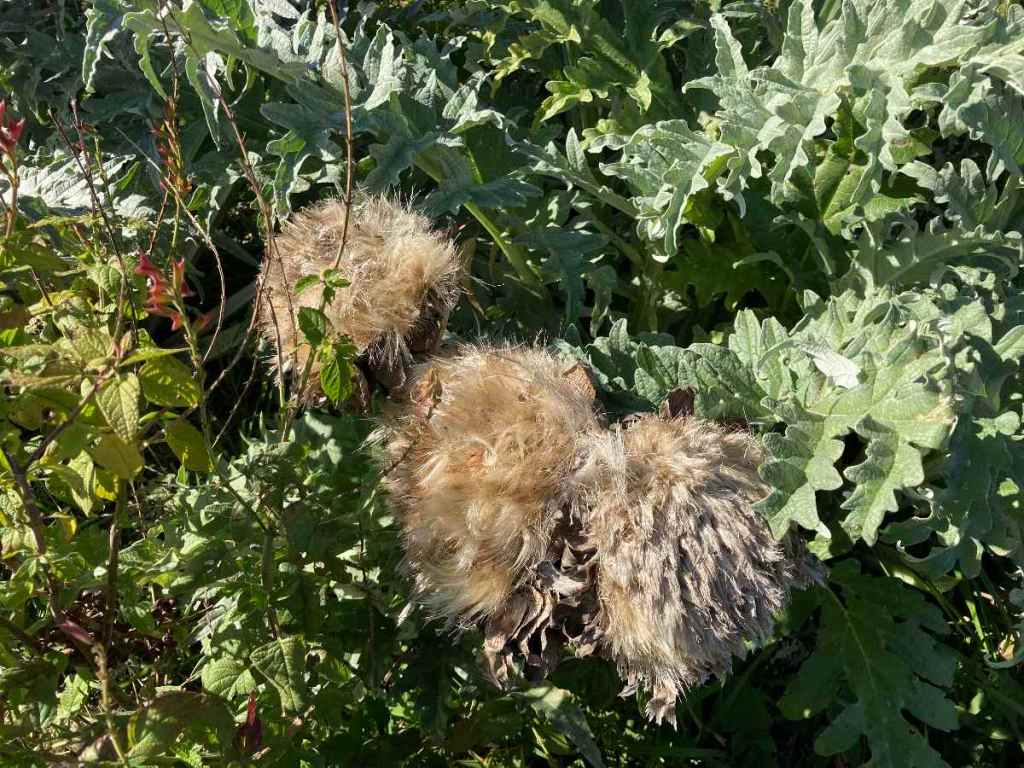
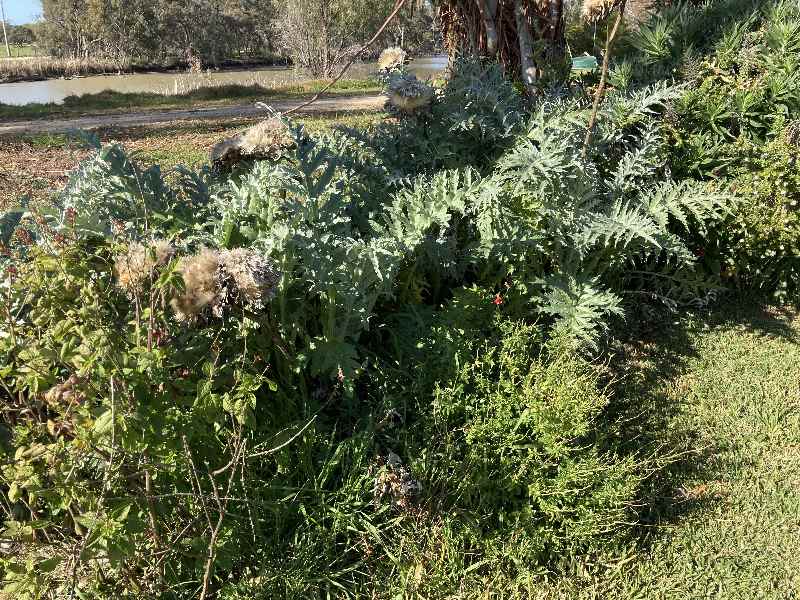
Another round ball of fluff is the seed of artichoke plants. Each little fluffy ball can have over 1500 seeds. They travel shorter distance and some people call the fluffy seeds, ‘fairies’ as the drift on the wind.

Early bulbs

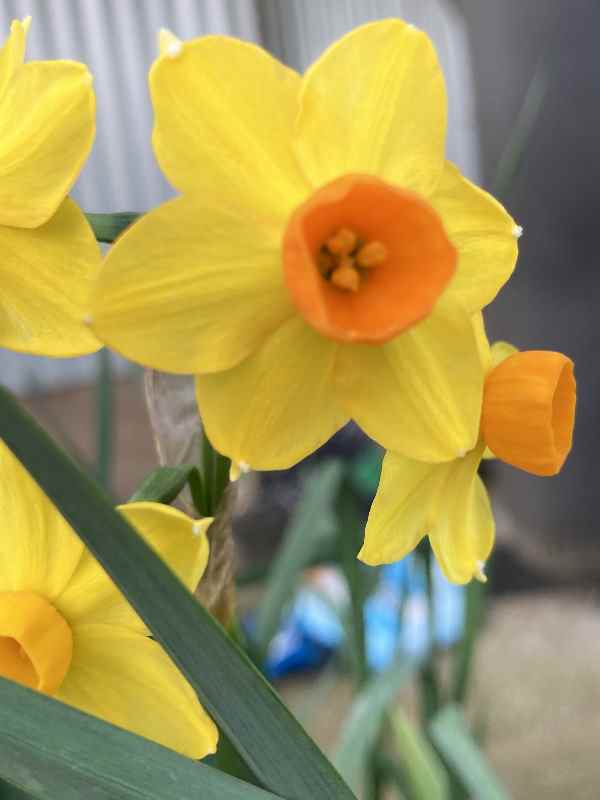
Spring is on its way. These flowering bulbs are all the more precious because I only have a few of them.

This shy daffodil was hiding. I had forgotten it was there. Lovely surprise.

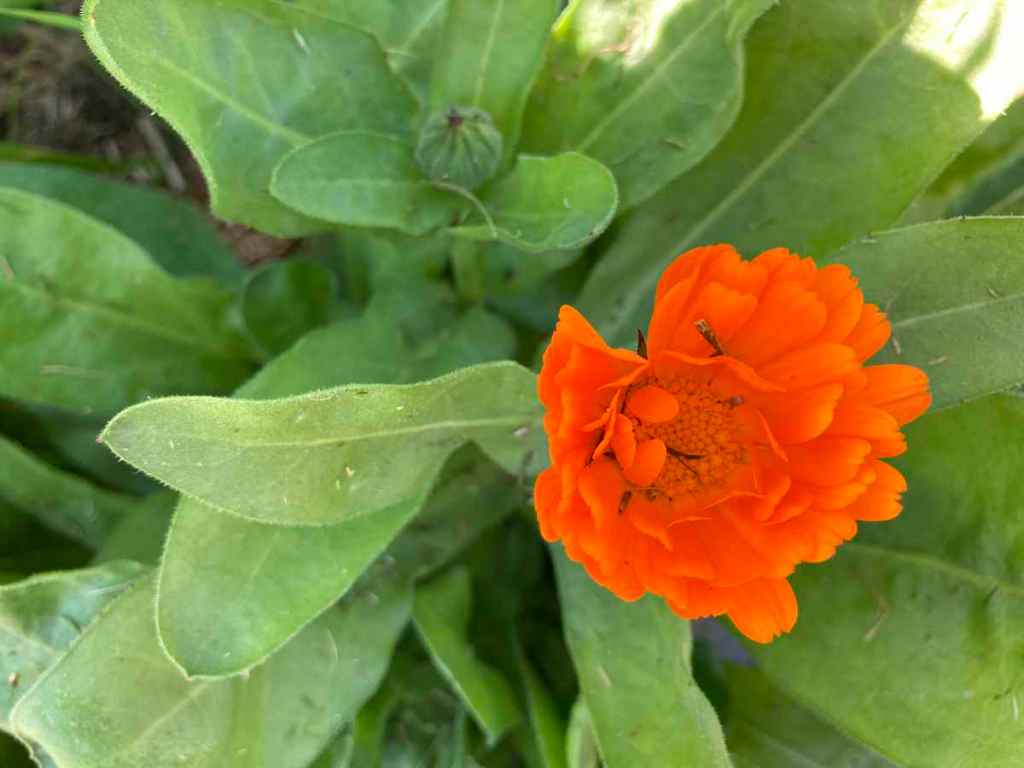
These have come up again from last year’s planting. The orange centres make them unmissable.

So pretty. I’m not sure what these are. Please comment if you can help.

Excited about echiums

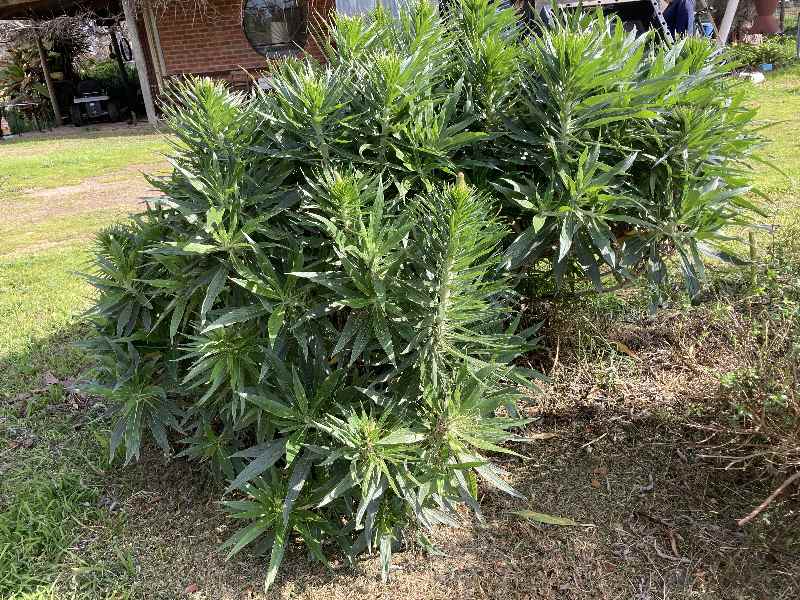
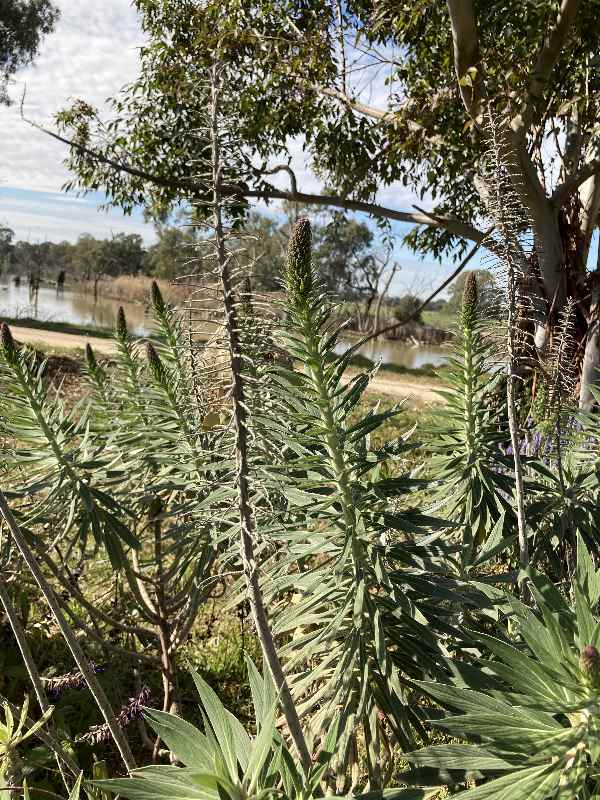
Echiums fascinate me. Here are two that are about to burst into amazing color. You’ll have to wait for it… I haven’t noticed many of these around where I live. My sister, who lives nearer the coast in much more temperate conditions, has them everywhere and I decided to try them out. They need lots of space; the send up flower spires, in this case a beautiful blue colour.

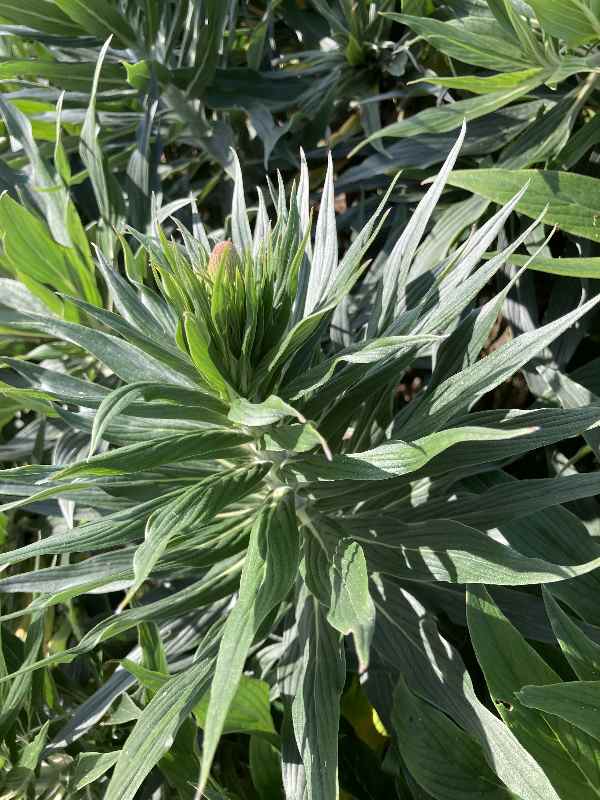
Looking carefully I noticed the buds

Earlier this year I thought that I had lost them. This one looked dead, but then I noticed some tiny self sown ones coming up amid the weeds underneath. I carefully weeded and watered them. I tried transplanting some into pots but they got neglected and needed more attention than they got.

Hidden in the foliage
Won’t be long now

Below is a different variety. There are some seed pods from last year still attached. This year I will take some photos and try to work out what varieties I have.

Aspiring for asparagus

In the last house I lived was located, as they said, “in the dead centre of town”. Over the road from my place was an old cemetery. In summer many of the old graves were quite beautiful; reason being, some lovely ferns grew alongside the graves. The pretty ferns were in fact, asparagus plants. Were they planted by relatives of the dead to look beautiful or were they just wild? Did they seed from the popular floral arrangements of the day? It’s not unusual to find asparagus plants in old cemeteries. I eventually learned to look out in spring, after the first rain. If I was quick, and beat other visitors, I could pick some amazing asparagus spears, tender, succulent and tasty. There’s something special about asparagus, picked fresh and taken straight away to the kitchen.

After moving to my present location, imagine my surprise and delight when I noticed clumps of those unmistakable ferny plants scattered randomly along the waterway in front of my house. In winter they grow with little red berries and then dry up and wait for the rain.

From past experience I have learned to cut back the plants to the ground. So I attacked this little clump. As the asparagus shoots poke, up the trick is to cut them as close to the ground as possible. They seem to like this treatment and continue to produce more and more. Bring on the rain.
Odd bee out

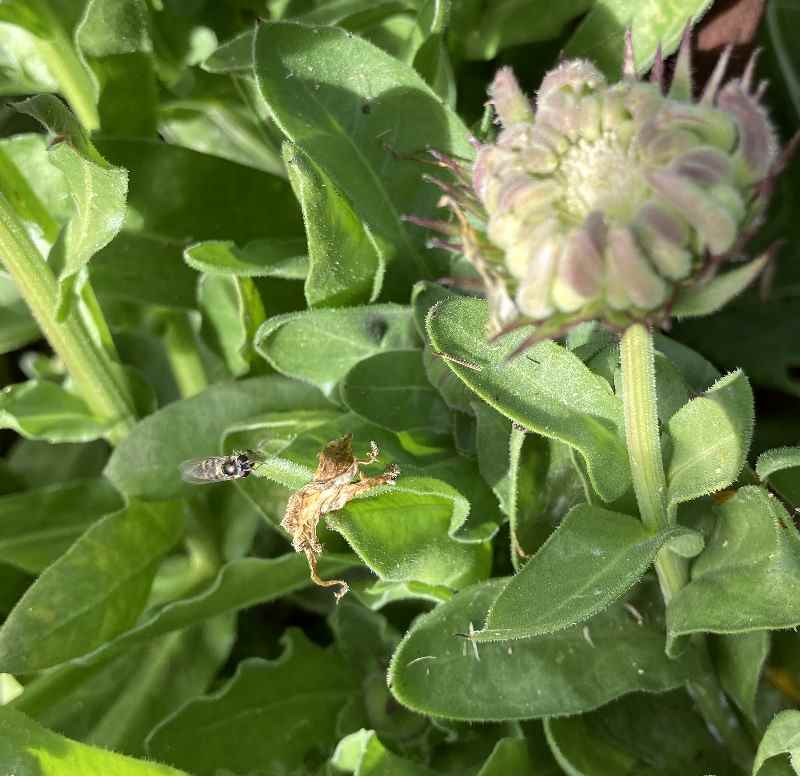
One of these bees is not like the others.

I first thought this might be a native bee, but after a little research I think this one might be a hover fly (Syrphidae)  not a bee.

I must admit I my knowledge of insects is limited. I’d not heard the term hover fly before. And I didn’t know that they are quite beneficial to the garden, even if they aren’t bees. They help with pollination and even eat aphids. They are called hover flies because it’s what they do – hover. They hover in the one spot, move suddenly forwards or sideways, and then hover again. Fascinating.

Pot watching

An old proverb says a watched pot never boils. In a previous post I mentioned I had planted some seeds. I’ve peeked in periodically, anxiously waiting for some progress. I was almost resigned to the fact that here was yet another seed tray, where I hadn’t provided the necessary care or skill, so they would never eventuate. Yes, blaming myself for their failure to germinate.

Take a close look at the seed tray. Is it possible that there is a tiny little shoot? Or maybe two? I dutifully sprinkled them with water, being careful not to flood them out. Grandchild number one, who was accompanying me at the time said, “Nan, I think it works better if you talk to them.” So, I said a few kind words and went off on my way.

I returned just before dark, curious to see whether there had , in fact, been any progress.

Thrilled! It doesn’t take much. There definitely has been some progress. Now I’m holding my breath and waiting. They should be hollyhocks. I have a spot in the garden just waiting for their arrival. I can’t wait.

Tree row

When we first bought our farm about 30 years ago, it was a run down ex-dairy farm. It is two kilometres of dirt track from a main road. The dairy was no longer functional and it had few fences that would keep an animal enclosed. Much of the land was salt affected and non productive. The agent suggested we run the tractor through the house and start again.

We gathered seed from the few trees around and carefully grew young trees in our first purchase, a glasshouse. We planted rows and rows of trees in an effort to reduce the water table, fix the salt problem and return health to the soil. Keeping the trees alive was a struggle. We fought rabbits, kangaroos, heat, lack of water and salty soils.

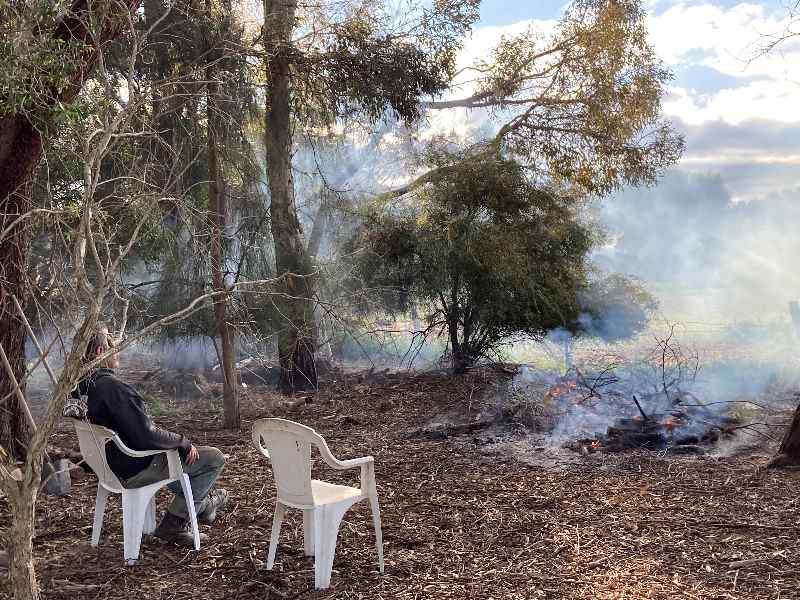
Since the covid lock down we have been cleaning up one of the tree rows. It’s a huge job, with a chain saw and fire. We’ve removed lots of dead branches on the ground. It’s become a problem because the rabbits have taken a liking to the shelter and are being very destructive. We cut tree limbs off fences and pruned trees and bushes. Hard work but we can see results starting to happen. AND bonus, we’ve taken the time to enjoy the winter sunshine and the outdoors.

Our favorite spot is in a remote spot that we nearly gave up on when we first started establishing the trees. We finally got some really tough little pine trees to grow where nothing else would. The sound of the wind in the pine needles really changes the ambiance of the little grove of trees.

Arty Artichokes

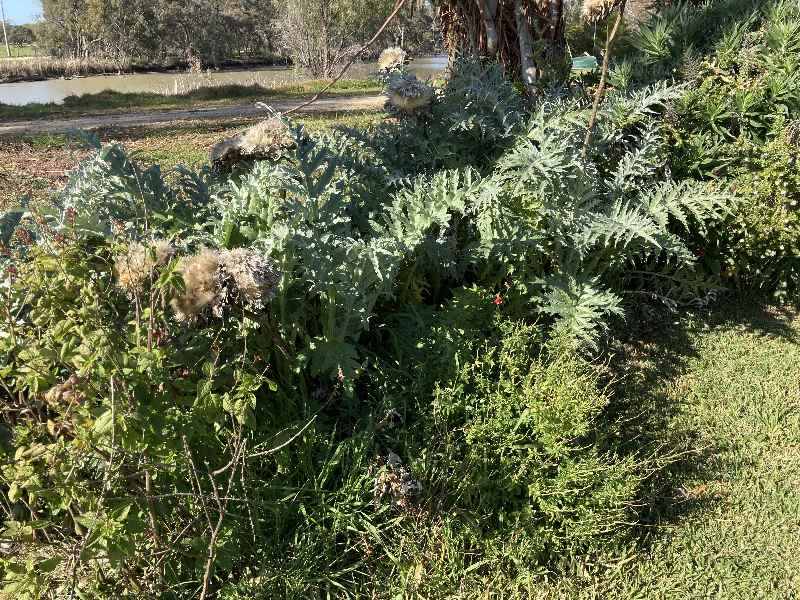
A neighbour cautiously asked us why we were growing thistles in our vegetable patch. I planted a few artichokes ages ago, knowing next to nothing about the plant. I still know very little about artichokes. I do know they are extremely hardy; they have to be to survive in my garden. And, they self seed. I’ve got to say they share lots of characteristics to the thistles who occasionally pop up in the paddocks who very unwelcome intruders. In fact, apparently, these globe artichokes are an actual variety of thistle. You eat the flower buds.

Obviously, I missed eating some of the flowers and they have gone to seed. I will admit to really liking them on pizzas, when I get one from the pizza shop, but I haven’t had much success in my own kitchen. Any suggestions are welcome.

This single specimen was self seeded. It has just been trimmed back. I have been feasting on a circle of broccoli planted around it. Just one left now. They co-existed very well together.

I love the look of the seeds. They are soft and fluffy. I don’t love the mess they make if you try to clean them up.

The salvia are trying, but they can’t compete here. I think they will have to be moved.

Spring cleaning in winter

Yesterday was one of those magic days that started off very cold and then the sun slowly warmed the day. It was a perfect day to go and get some farm work underway. Although it is early winter, we did a spot of spring cleaning along one of our fences. It is overdue for replacement, but first it needed some cleaning up around it. The wattle trees have a short life span anyway and needed to be trimmed back. The trees had dropped limbs, making access difficult.

Getting rid of the rubbish was satisfying after a hard day’s work.

and while were we on a roll, a patch of weedy reeds as well